

Your Medspa’s Intake Forms Are a HIPAA Minefield
In 2025 alone, over 700 large healthcare data breaches were reported to the HHS Office for Civil Rights, affecting more than 61 million individuals. Much of this exposure comes from how patient data is collected and handled at the first point of contact.
Your intake forms collect names, health history, and treatment details, and these qualify as protected health information under HIPAA. Yet, many medspa owners don't realize their forms are non-compliant until an audit forces the issue.
As a covered entity, compliance isn't optional. So, let’s break down what HIPAA requires from your intake forms, what fields to include, and which safeguards to implement.

What Is a Patient Intake Form Under HIPAA?
Under HIPAA, any form that collects Protected Health Information (PHI) is subject to federal regulation. PHI includes any individually identifiable health information tied to a patient, whether it's captured on paper, in a PDF, through an online form, or in consultation photos.
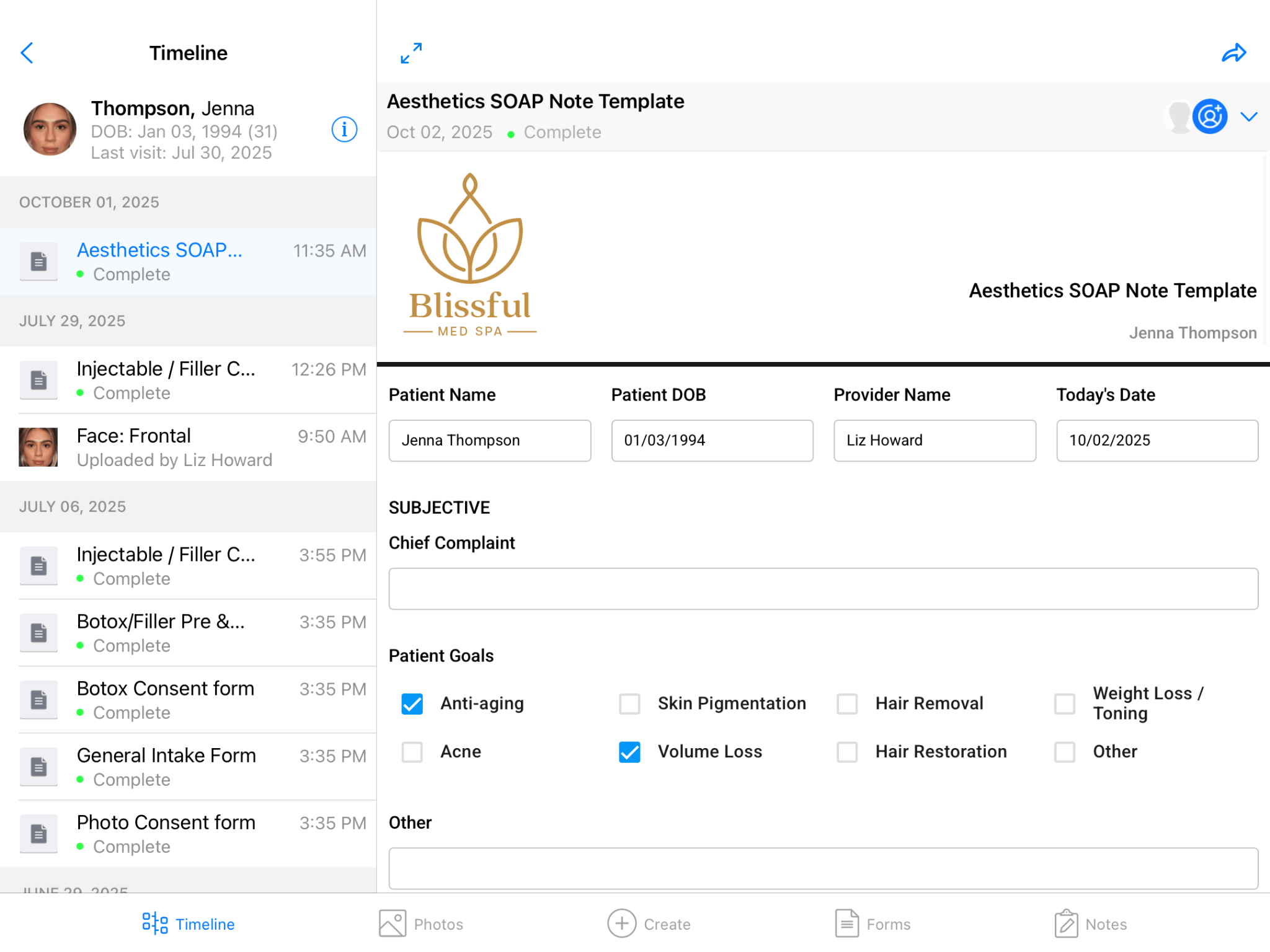
This means your intake process goes beyond standard administrative paperwork. Every form your patients complete must be collected securely, stored in a protected environment, and only accessible to authorized staff.
Once a form collects a patient’s name alongside their health history or treatment goals, it becomes PHI. At this point, HIPAA’s full set of requirements applies.
How Medspa Patient Intake Forms Ensure HIPAA Compliance
Building a compliant intake is more than just choosing the right fields. HIPAA requires three categories of safeguards for any practice handling PHI, and your intake process needs all three to stay protected:
- Administrative Safeguards
This category covers the intel policies your team follows. That means designating a privacy officer, documenting clear protocols around who can access patient data, and training every staff member who touches intake information.
Primary handlers include desk coordinators, injectors, and anyone else reviewing patient histories before a treatment.
- Physical Safeguards
Physical safeguards protect the environments where patient data is accessed or stored. For medspas, this includes:
- Restricting access to devices that hold intake data.
- Setting locked screen policies on front desk tablets.
- Establishing secure disposal procedures for paper forms still in use.
A common gap is leaving an iPad with patient records unlocked at reception during a busy treatment day.
- Technical Safeguards
These safeguards protect data both in transit and at rest. For your practice to be compliant, it needs:
- Encryption on all stored forms.
- Unique login credentials for every staff member.
- Automatic session timeouts.
- Audit logs that track who viewed or modified a record.
If you're also capturing clinical photography as part of your documentation process, those images fall under the same technical protections as your intake data.
Missing any one of these three categories will make your intake process non-compliant, even if no actual breach occurs. HIPAA enforcement is risk-based, so the absence of safeguards is itself a violation.
What Fields to Include in HIPAA-Compliant Medspa Intake Forms
A well-structured intake form satisfies your clinical and legal obligations while also building patient trust through professionalism. HIPAA’s minimum necessary standard requires that you only collect information needed for care and operations, so every field should have a clear reason behind it. Here’s what fields to include in the intake forms:
- Personal Identification Information
Start with the basics that identify your patient and establish how to reach them:
- Full legal name.
- Date of birth.
- Home address.
- Phone number and email address.
- Emergency contact details.
- Medical History
Aesthetic treatments interact differently depending on a patient’s health profile. Missing information creates both clinical risk during treatment and legal exposure afterward. The medical history should include:
- Current medication and dosages.
- Known allergies.
- Previous cosmetic or surgical procedures.
- Existing skin conditions or medical diagnoses.
- History of keloid scarring.
- Adverse reactions to past treatments.
- Treatment-Specific Information
Beyond general medical history, each procedure carries its own set of considerations. Your intake form should capture details relevant to the specific services your practice offers:
- Areas of concern.
- Treatment goals.
- Previous experience with similar procedures.
- Lifestyle factors that may affect outcomes (sun exposure, smoking, etc.).
- Consent and Authorization Fields
This is the area where HIPAA compliance directly intersects with your patient-facing documentation. These fields establish a legal foundation for your practice:
- Informed consent to the proposed treatment.
- Authorization to collect, store, and use PHI.
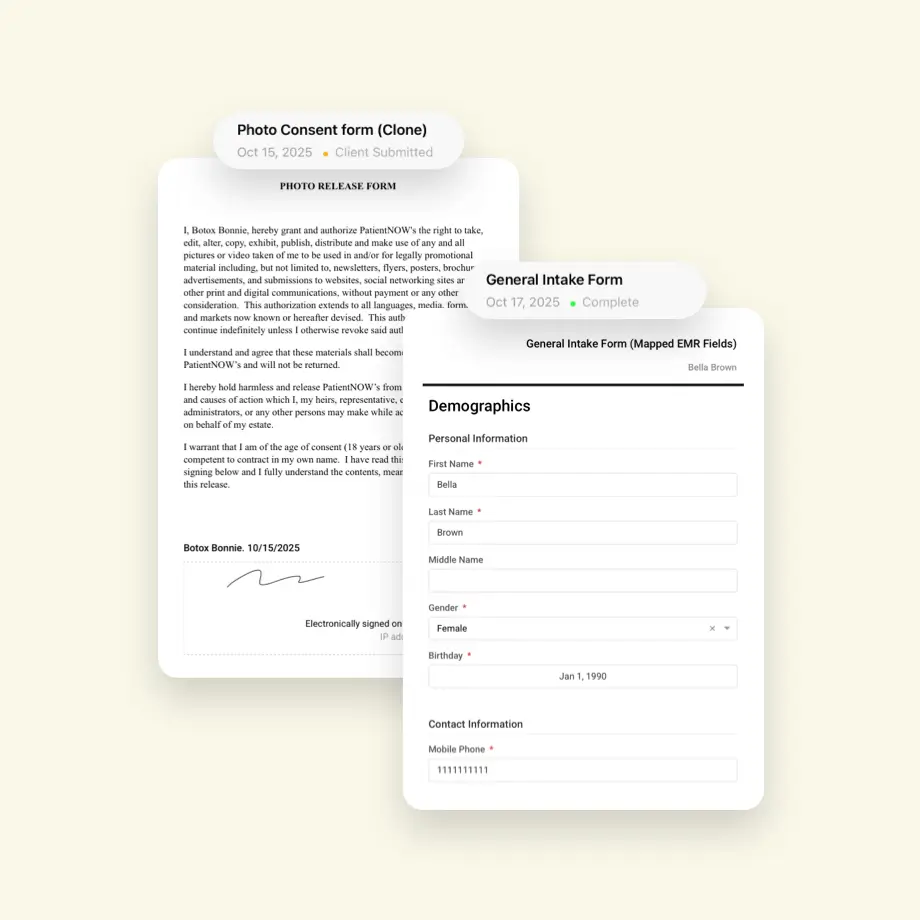
- Photo consent for clinical photography and potential marketing use.
- Acknowledgment of patient rights under HIPAA.
- Payment and Insurance Information
Even for elective procedures, financial data requires the same level of secure handling as clinical information:
- Preferred payment method.
- Insurance details (if applicable).
- Agreement to financial responsibility terms.
Finally, leave space for clinical staff to document observations, flag contradictions discovered during review, and note pre-treatment assessments. Keeping everything in one structured, secure record makes compliance easier to maintain as your practice scales.
Do HIPAA Regulations Allow E-Signatures on Intake Forms?
Yes. HIPAA doesn’t prohibit e-signatures, and both the ESIGN Act and the Uniform Electronic Transactions Act (UETA) recognize e-signatures as legally valid across the United States.
For medspas, this significantly improves intake workflows. E-signatures let patients complete consent remotely before their appointment, reducing front-desk congestion. They also eliminate incomplete or illegible paper signatures that slow down documentation and create compliance risk.
Research shows that 81% of patients now prefer digital intake forms over paper and clipboards, so the trend matches what your patients already expect.
That said, a signature is only as compliant as the system that stores it, which is why the platform you use matters as much as your decision to go digital.
RxPhoto: Built for Compliant Medspa Documentation
When intake forms, patient photos, and treatment records live across different tools, gaps form between them. Those gaps are where compliance risk hides, in mismatched records, unsecured transfers, and documentation that no single platform can fully account for.
RxPhoto eliminates those gaps by bringing everything into one HIPAA-secure environment. You can build intake forms that reflect your practice, customizing fields, consent language, and authorization options to match your workflows.
PatientNow Intake and Consent Forms Sync
As RxPhoto connects forms and notes, clinical photos, and treatment records in a single platform, your staff never needs to switch between apps. The visit timeline gives you a view of every patient interaction, so you can review past intake details, compare before-and-after photos, and track treatment progress all in one place.
Storage is built with encryption, role-based access, and audit controls baked in, so only authorized team members can access patient records.
Make Your Intake Forms Work for You
Compliance is part of every patient interaction, not just a requirement. Every form, signature, and record needs to be handled securely to avoid risk and build patient trust. Problems usually happen when intake forms, photos, and treatment records are stored in different systems. That’s where mistakes and compliance gaps show up.
RxPhoto solves this by bringing everything into one place. You can create custom intake forms, collect e-signatures, and automatically link them to patient records along with photos and notes, without switching between tools. With built-in security like encryption, access controls, and audit logs, your data stays protected. Your team saves time, and patients also get a flawless experience.
So, ready to simplify your compliance workflow? Book a demo today.
Frequently Asked Questions
Are medspas considered covered entities under HIPAA?
Yes. Medspas that collect, store, or transmit patient health information are classified as covered entities under HIPAA and must comply with all applicable regulations.
What happens if a medspa violates HIPAA?
Penalties depend on severity. Unknowing violations carry fines ranging from $100 to $50,000 per violation. Willful neglect or repeated violations can lead to criminal charges and lasting reputational damage to your practice.
Can medspa intake forms be completed digitally?
Yes. Digital intake forms are fully HIPAA-compliant when collected, stored, and transmitted through a secure, encrypted platform with proper access controls in place.
How long should medspas retain HIPAA-related documentation?
HIPAA requires compliance documentation, including policies, procedures, training records, and audit logs, to be retained for at least six years from creation or last use. But medical record retention periods are governed by state law, not HIPAA. So, check your state's specific requirements.
Explore this post
Book a demo to see RxPhoto in action