

Quick Summary
Most plastic surgery documentation problems aren't caused by missing records. They come from disconnected systems, inconsistent photography, scattered forms, and hard-to-track progress. Clinics need a unified system that connects photography, consent forms, and clinical notes in one place, so records remain consistent, comparable, and compliant as your practice grows.
Why documentation breaks down in plastic surgery
It's tempting to blame documentation problems on missing records, but in most plastic surgery practices, the opposite is true. The records exist, but they’re stored in separate systems.
For example, photos are stored on one device, consent forms are in a filing cabinet, and treatment notes are on a third platform. When those components don't communicate, tracking a patient's progress is little more than guesswork.
With physicians now spending a third of their week on documentation and admin rather than patient care, the problem is hard to ignore. That’s why this guide walks through the documentation challenges plastic surgery clinics face most and what connected, consistent records make possible.
Why documentation matters in plastic surgery
Plastic surgery patients make significant financial and emotional investments, and they expect every detail of their care to be handled with precision. Documentation is where that precision either holds or falls apart.
For plastic surgeons, accurate and connected records do four things at once:
- Legal protection for the practice when consent or treatment details are questioned.
- Sound clinical decisions backed by a complete, accurate patient history.
- A whole team working from the same information instead of scattered notes.
- Patient confidence that every detail of their care is being handled with precision.
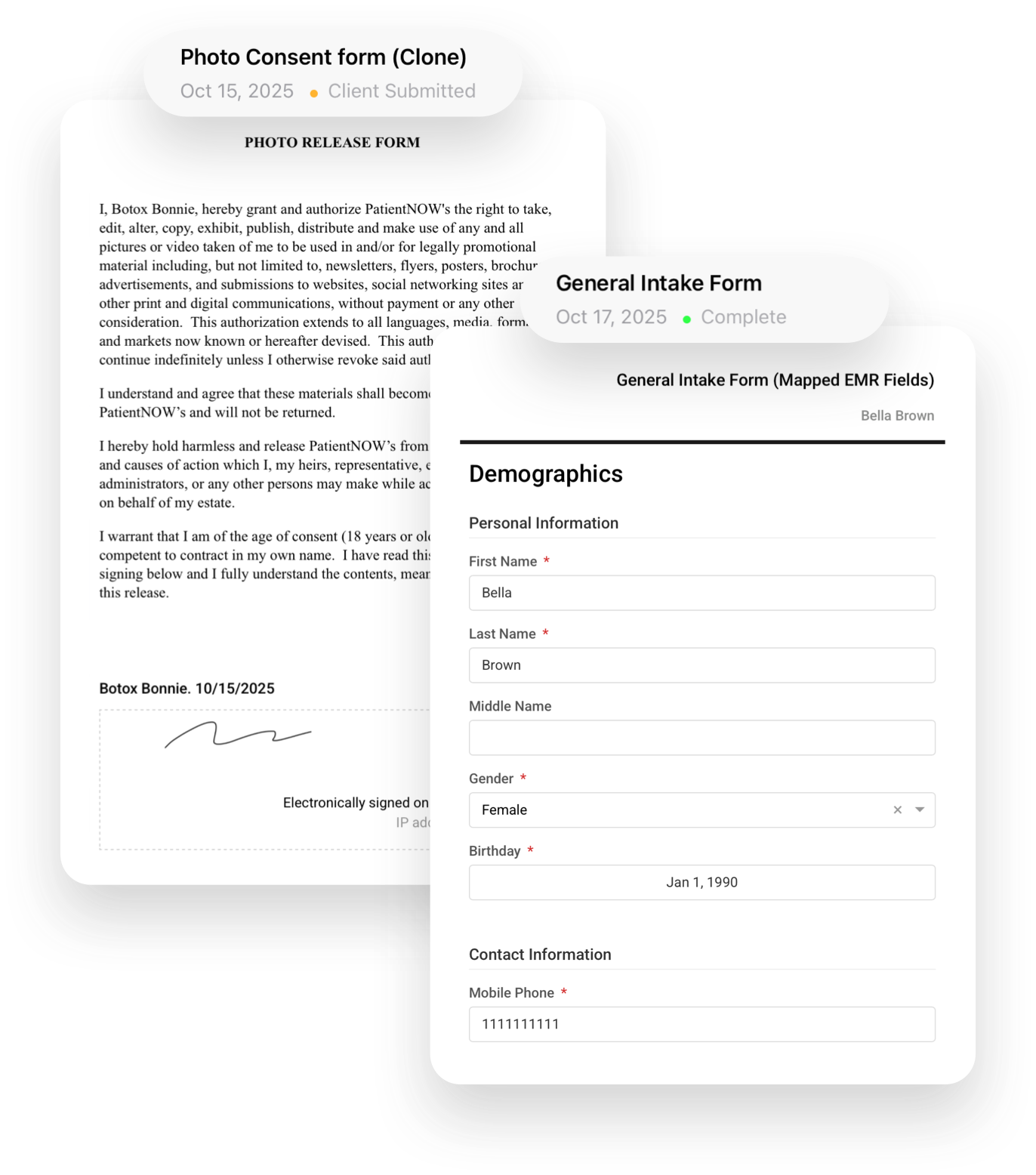
Before-and-after photos, consent records, and treatment notes form the foundation of every successful consultation. When those records are consistent and easy to pull up side by side, a surgeon can show progress and plan the next step with clarity.
Strong documentation, in other words, isn’t administrative overhead. It’s how plastic surgeons deliver and demonstrate the standard of care their patients expect.
Common documentation issues and challenges plastic surgery practices face
Plastic surgery practices run on detail, so the consequences of a documentation breakdown show up fast. They manifest as derailed consultations, compliance gaps, and friction between team members. These are the issues that come up most often:
- Inconsistent clinical photography
Staff captures before-and-after photos at different angles, lighting conditions, and distances. Without a shared protocol, those images can't be compared reliably between visits. That compromises both the consultation and any marketing built on the results.
- Disconnected systems
Photos in one app, forms on paper, and notes in another tool create a documentation trail with gaps. The information exists, but no one can see a patient's full picture in one place, which slows down everyone who touches that record.
- Difficult progress tracking
Plastic surgery results show up over months, so when a patient returns for follow-up, staff need their baseline images, prior notes, and consent history immediately. Scattered records turn a two-minute review into a frustrating search, right when the patient is in the room.
- Incomplete forms and records
Gaps in intake forms, consent records, and treatment notes expose practices to legal and compliance risk. An incomplete consent record or a missing photo release feels like it doesn't matter until it suddenly matters a lot.
- Records that aren't built to scale
A loose system can work with a small patient list. But as volume grows, new staff inherit inconsistent habits, and documentation quality starts to depend on individuals rather than standardized processes.
What a strong plastic surgery documentation workflow looks like
A strong documentation workflow runs in the background, keeping records accurate, connected, and easy to retrieve while staff focus on patients. Consent forms, intake records, and patient history are captured and ready before the patient arrives. Beyond that, a few other characteristics define it:
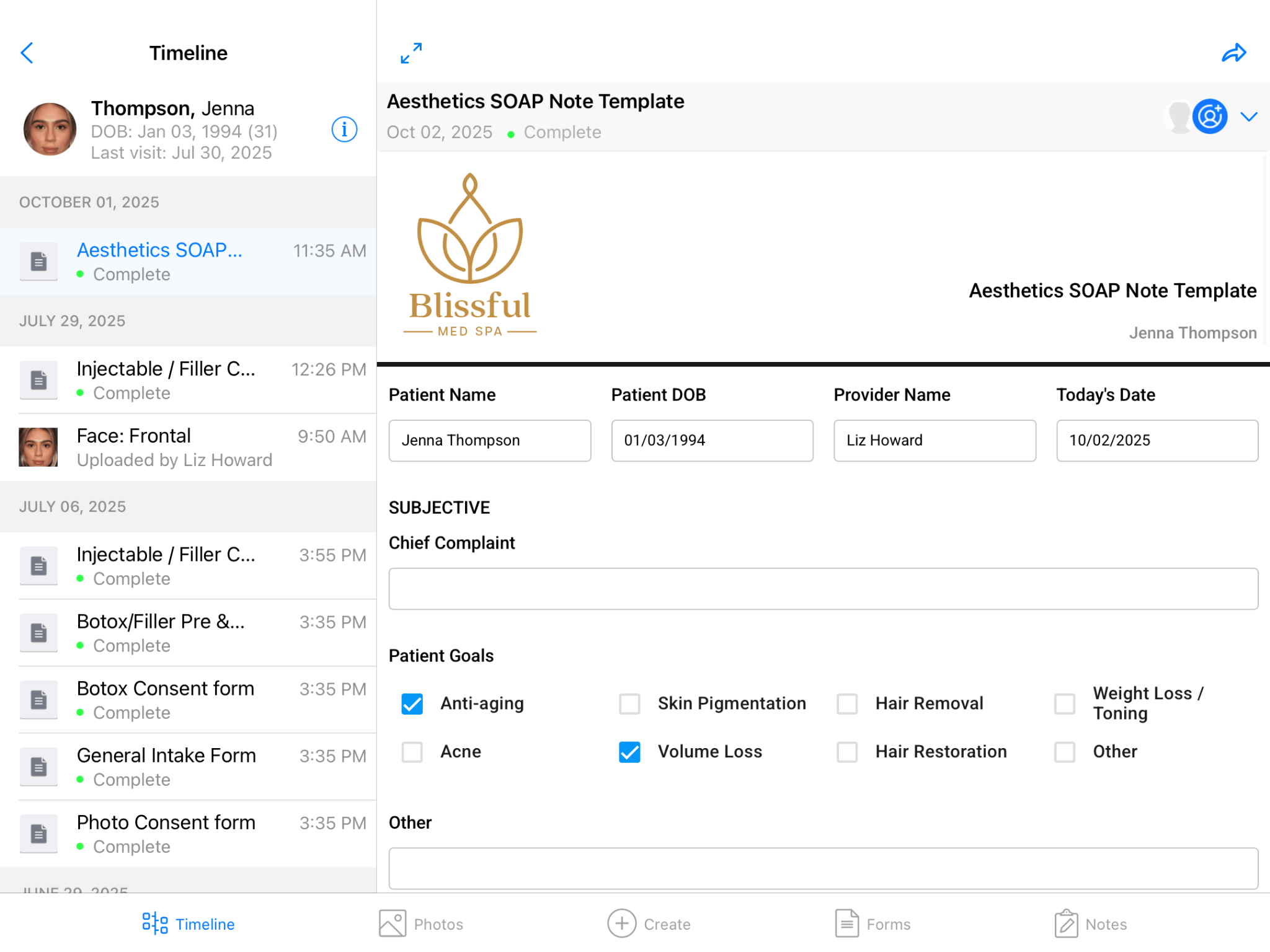
- It connects every record to the patient: Photos, consent forms, and treatment notes are stored together in a single patient file, so anyone on the team sees the full picture at once.
- It keeps photos consistent and comparable: Standardized capture means before-and-after images look the same regardless of who took them. When a patient returns months later, their baseline is easy to find and ready to place side by side.
- It makes progress visible over time: A good workflow lets a surgeon line up images and notes across visits, turning scattered data into a clear treatment story.
- It protects the practice by default: Secure storage and complete consent records aren't manual chores. The system maintains compliance at the infrastructure level.
- It scales with the practice: As patient volume grows, the workflow keeps up. New staff onboard smoothly, and documentation quality stays consistent even when the clinic is busy.
How to improve documentation handling in plastic surgery practices
Fixing documentation gaps doesn’t necessarily mean tearing down your entire system. A few changes, applied consistently, recover the time, trust, and revenue that fragmented documentation costs. Here’s how:
Standardize your clinical photography protocol
Set clear rules for positioning, lighting, distance, and framing, and make sure every team member follows them. Consistent capture turns your before-and-after library into a reliable clinical and marketing asset.
Bring records into one connected system
The goal isn't just centralizing photos. You want to connect photos, forms, and notes so a patient's full record is accessible from one place. When everything links to the same file, progress tracking and consultations get far easier.
Digitize your forms and notes
Paper intake forms, consent forms, and treatment notes slow your team down and leave gaps when they go missing. Digital documentation captures consent, photo releases, and charting in one place, reducing errors and making audits straightforward.
Build compliance into the system
Compliance shouldn't depend on someone remembering to do it. Purpose-built tools handle secure storage and consent tracking automatically, so you’re always protected without constant oversight.
Choose mobile-first tools
Pick tools your staff can use straight away with minimal setup. A mobile-first design also fits the chair-side, room-to-room, and on-the-move operating model of plastic surgery teams.
Why generic documentation tools fall short
Most general-purpose documentation tools weren’t built with aesthetic practices in mind. They manage basic record-keeping but miss the connected records, standardized photography, and progress tracking that plastic surgery clinics actually need.
The gaps tend to look like the following:
- Photos, forms, and notes that are disconnected across systems.
- No standardized photo capture, so images can't be compared visit to visit.
- Storage that isn't built by design for the secure handling of patient records.
- Complex interfaces that require training and slow the team down.
Generic platforms either require workarounds or force your team to fill the gaps manually. Both approaches reintroduce the fragmentation you were trying to solve in the first place. That’s why you should choose a tool specifically designed for how plastic surgery clinics operate.
How RxPhoto simplifies plastic surgery documentation
RxPhoto is built specifically for aesthetic practices that need documentation tools to match the standard of care they deliver. Its strength is connection, such as linking photos, forms, and notes in one seamless system.
The platform specializes in standardized clinical photography that keeps every image consistent with minimal effort. This matters when results unfold over time, whether you’re documenting rhinoplasty before-and-after photos or tracking progress across a multi-stage treatment plan.
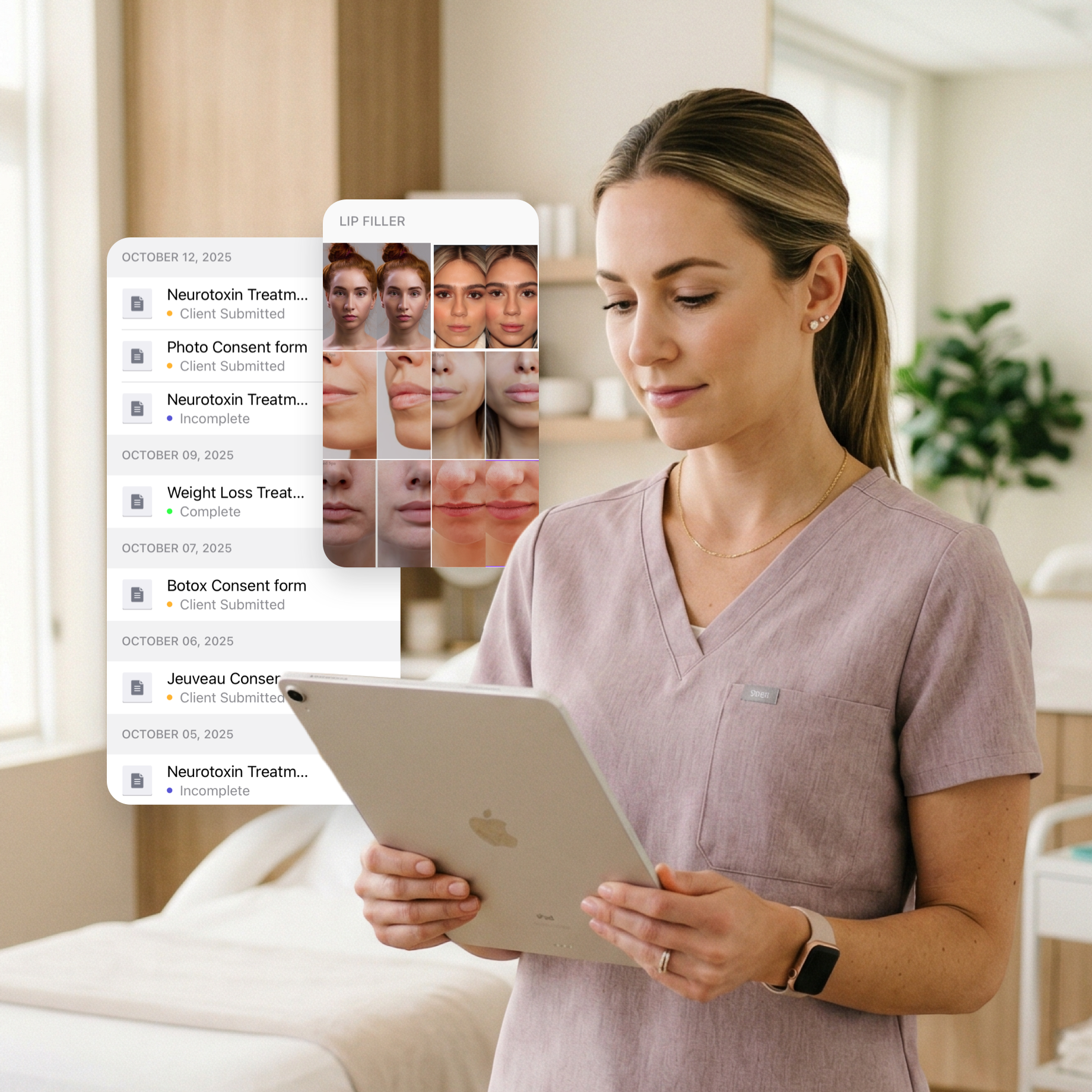
RxPhoto handles the full documentation workflow in one mobile app. Your team gets:
- Integrated charting that links photos to treatment notes and patient history under a single record.
- Before-and-after comparison tools that line up images across visits, giving patients clear visual evidence of their progress.
- Digital consent and intake forms that automatically capture and organize signed records, including photo releases.
- Secure storage that keeps patient images and records protected without manual oversight.
Nothing lives on personal devices. But more importantly, every record is where your team expects it to be, retrievable in seconds when a consultation is about to start.
Stop letting documentation hold your practice back
Plastic surgery clinics lose consultations, credibility, and revenue due to fixable documentation problems. Don’t settle for inconsistent photos, missing consent records, or manual workflows.
RxPhoto integrates clinical photography, consent forms, and treatment notes into a single secure system, so your documentation remains consistent and comparable as your practice grows.
Book a demo today and see how RxPhoto fits your clinic’s workflows.
Frequently asked questions
Why is standardized clinical photography important in plastic surgery?
Consistent before-and-after photos make results comparable across visits, which supports accurate progress tracking and stronger consultations. Without a shared standard, image quality varies by photographer, and the comparisons lose their meaning.
How does poor documentation affect patient consultations?
When photos, notes, and consent records are stored in different places, staff can't quickly pull up a patient's full history. Patients need clear visual evidence to feel confident, and a disjointed record makes that hard to deliver in the moment.
What makes RxPhoto different from generic documentation tools?
RxPhoto is built specifically for aesthetic practices. It combines standardized photo capture, HIPAA-secure storage, digital consent management, and integrated charting into a single app designed around clinical workflows.
Can RxPhoto support a growing plastic surgery practice?
Yes. Standardized workflows and a mobile-first design help maintain consistent documentation quality as patient volume grows. New team members are onboarded quickly so the practice can meet demand without letting documentation standards slip.
Explore this post
Book a demo to see RxPhoto in action