
Quick Summary
This blog reviews 7 top plastic surgery apps for documentation, consultations, patient engagement, and practice management. Includes clinical photography, 3D simulations, and operational tools, with RxPhoto, TouchMD, and Crisalix among our top picks.
Looking for Plastic Surgery Apps?
Plastic surgery practices operate in a highly digital, patient-driven market. Today's patients research procedures extensively, compare providers online, and expect clear visual proof, seamless consultations, and transparent communication before committing to elective care.
At the same time, practices face growing challenges. Maintaining consistent clinical photography, managing high-quality documentation, ensuring compliance, and standing out all take effort. These pressures directly impact patient trust, satisfaction, and growth, making plastic surgery apps an essential part of modern practice operations.
This guide reviews seven plastic surgery apps across documentation, simulation, patient engagement, and practice management to help you find one that fits how your team actually works.
Why Listen to Us
RxPhoto works directly with plastic surgery practices and medspas to solve one of the industry's most persistent challenges: consistent, HIPAA-compliant visual documentation. Our platform combines standardized clinical photography, patented ghosting technology, digital consent management, and consultation workflows used daily by real practices. This hands-on experience gives us firsthand insight into what drives patient trust, consultation conversion, and practice growth

What Is a Plastic Surgery App?
A plastic surgery app is a digital tool built specifically for the clinical, consultative, and operational needs of aesthetic and reconstructive surgery practices. Unlike general healthcare software, these apps focus on visual communication, patient education, documentation, simulation, and practice efficiency.
Most fall into a few core categories: clinical photography, consultation simulation, practice management, surgical planning, and marketing support. Some apps specialize in one area, while others try to cover multiple functions. But the right choice depends on where your practice needs the most support.
Benefits of Using a Plastic Surgery App for Your Practice
Plastic surgery-specific apps deliver value across the entire aesthetic patient journey, where trust and clarity are critical. Here’s how they can benefit your practice:
- Better Consultations: Visual tools improve patient understanding and help set realistic expectations. When patients can see what's possible, conversations become more productive, and decisions come faster.
- Stronger Patient Trust: Interactive experiences encourage patient involvement and build confidence in both the procedure and the provider. Patients who feel informed are more likely to move forward.
- Consistent Documentation: Standardized capture and secure storage reduce variability across staff and visits. Built-in consent management also helps practices maintain HIPAA compliance and minimize risk.
- Marketing-Ready Assets: Real patient outcomes become trust-building visuals for your website, social media, and consultations, and high-converting before-and-after galleries do the selling for you.
- Operational Efficiency: Streamlined workflows free up time for patient care, and the right tools support scalability without sacrificing quality or consistency as your practice grows.
Best Plastic Surgery Apps (7 App Reviews)
1. RxPhoto
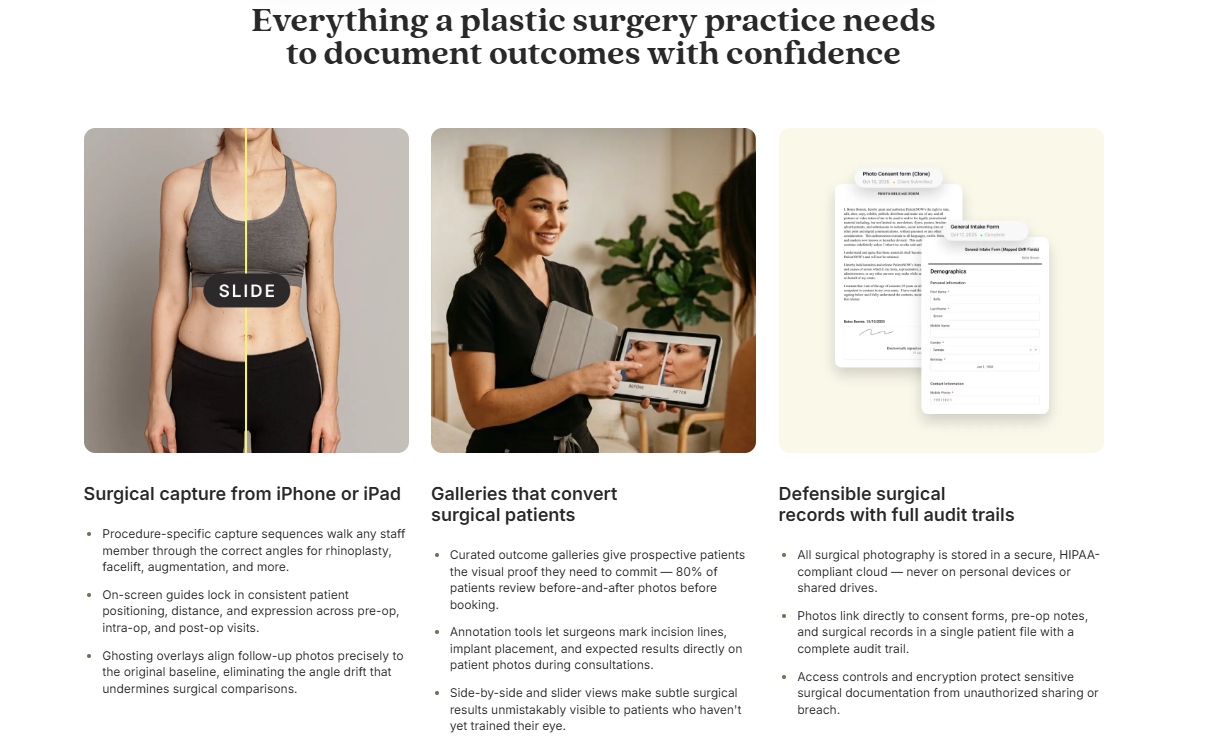
RxPhoto is a clinical photography platform built specifically for plastic surgery practices and medspas. It turns any iPhone or iPad into a HIPAA-compliant imaging system that standardizes how your team captures, stores, and shares patient photos. Guided positioning templates and patented photo ghosting ensure consistent, professional-quality images across all staff members and visits. Photos also sync automatically to encrypted cloud storage. This removes the compliance risks frompersonal devices and scattered folders, while saving practices an average of 7 minutes per patient visit.
Key Features:
- Standardized clinical photography: On-screen positioning templates and photo ghosting ensure every image is captured from the correct angle, distance, and lighting.
- HIPAA-compliant storage: Images are encrypted and uploaded automatically to secure cloud storage with controlled access for authorized staff only.
- Digital consent management: Capture patient signatures and manage consent documentation directly within the app.
- Visual consultation tools: Before-and-after sliders and interactive presentations with watermarking help patients understand treatment options and outcomes.
- Marketing & website integration: Auto-sync galleries to websites, use Kiosk Mode in-clinic, or create social media content via Canva.
- EMR integration: Connect with PatientNow, EnvisionNow, and other systems to keep photos linked to patient records.
2. TouchMD

TouchMD is a patient education and consultation platform endorsed by the American Society for Aesthetic Plastic Surgery. It combines interactive visual presentations, digital consent forms, and telehealth into one system. Patients can access consultation materials at home through the myTouchMD app, helping them feel confident about their decisions.
Key Features:
- Interactive consultation tools: Educate patients with 3D animations, procedure videos, and before-and-after comparisons during appointments.
- Digital consent forms: Replace paper with secure, cloud-stored documents that sync directly to your EMR.
- Virtual consultations (TouchMD Reach): Conduct HIPAA-compliant video consultations with integrated screen sharing and image review.
3. Crisalix
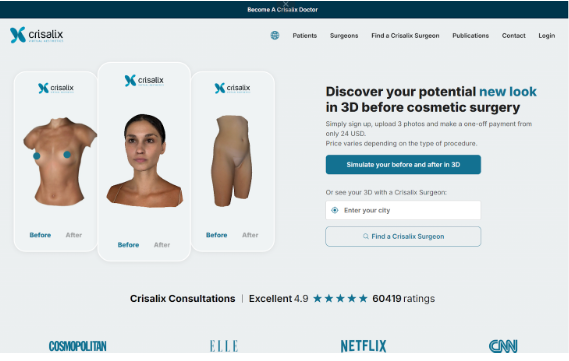
Crisalix is a 3D and 4D simulation platform that helps patients visualize potential surgical outcomes before committing to a procedure. Surgeons upload three standard photos, and the software generates a manipulable 3D model. Patients can even wear VR goggles to see how breast implants would look on their own bodies in real time.
Key Features:
- 3D outcome simulation: Convert standard photos into manipulable 3D models showing potential surgical results.
- 4D virtual reality: Let patients wear VR goggles to see how implants or changes would look on their body.
- Implant database: Access extensive implant data from major manufacturers to compare sizes, shapes, and profiles.
4. Nextech
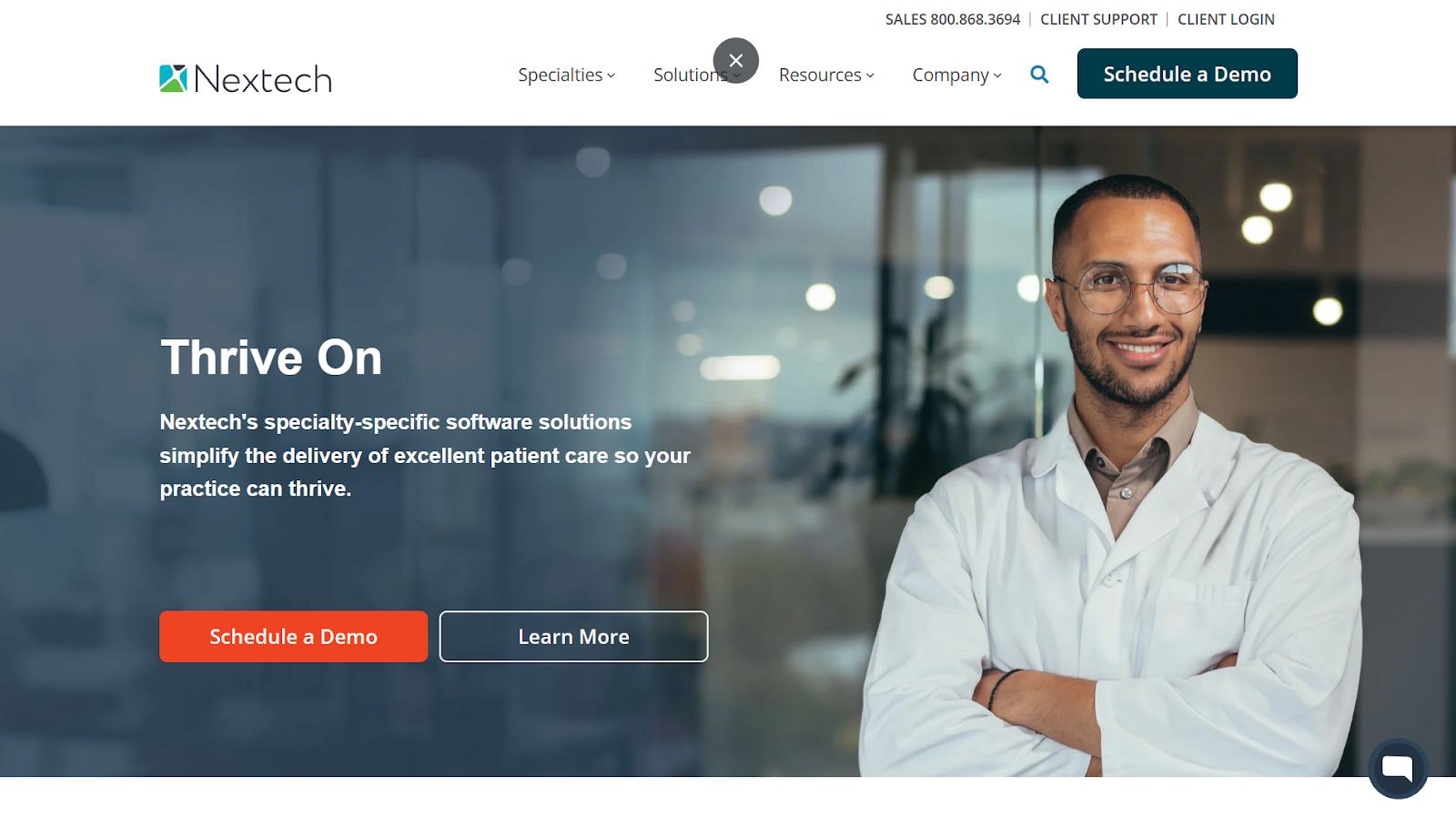
Nextech is a specialty-focused EHR and practice management platform built specifically for plastic surgery, dermatology, and medspa practices. The cloud-based system combines charting, scheduling, billing, lead management, and photo management into one solution.
Key Features:
- Single-page charting: View all relevant patient information without clicking between tabs, reducing documentation time.
- Integrated photo management: Capture and import images directly to patient charts with before-and-after comparison tools.
- Lead management: Track marketing performance and automate follow-up to convert more consultations into bookings.
5. RealSelf for Practices
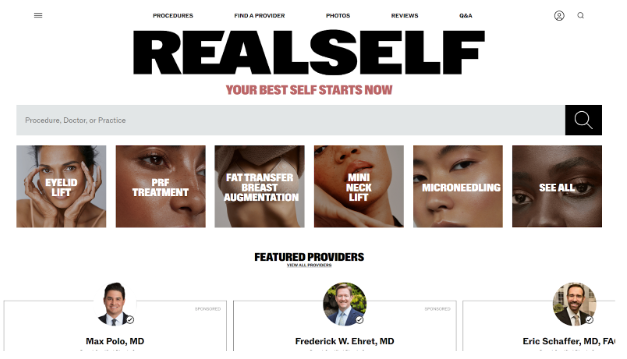
RealSelf is a patient-facing marketplace where consumers research cosmetic procedures and connect with providers. With over 2 million reviews and 30,000 registered doctors, it functions as a discovery platform where prospective patients evaluate surgeons before booking.
Key Features:
- Doctor profile: Showcase your expertise, credentials, before-and-after photos, and patient reviews in one place.
- Patient reviews: Build credibility through verified reviews that cannot be removed or altered for payment.
- Q&A engagement: Answer patient questions to demonstrate expertise and attract prospective clients.
6. VECTRA (by Canfield Scientific)
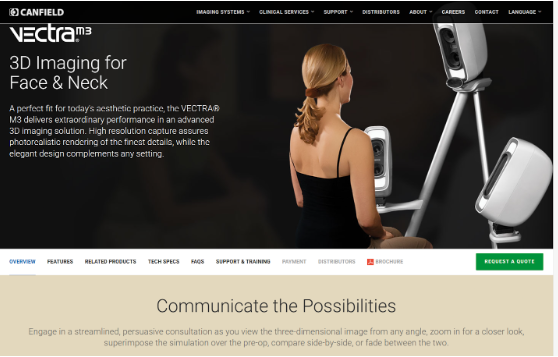
VECTRA is a professional-grade 3D imaging system that captures ultra-high-resolution images of the face, breast, and body for surgical planning. Using multiple cameras that fire simultaneously, it creates precise 3D models that surgeons can manipulate with Sculptor software to simulate outcomes.
Key Features:
- Ultra-high resolution 3D capture: Multiple synchronized cameras create detailed face, breast, and body models in milliseconds.
- Sculptor simulation software: Manipulate 3D models to show patients potential results for augmentation, rhinoplasty, and contouring.
- Markerless tracking: Compare pre- and post-operative results with clinical precision for outcome documentation.
7. Pabau Practice Management

Pabau is an all-in-one practice management platform built for medspas, cosmetic surgery clinics, and aesthetic practices. It combines scheduling, client records, digital consent forms, before-and-after photography, marketing automation, and billing into a single system.
Key Features:
- Before-and-after photography: Capture unlimited photos and create professional comparison images with drag-and-drop editing tools.
- Digital forms and consent: Replace paperwork with customizable intake forms, treatment plans, and consent documents that sync to patient records.
- Built-in marketing suite: Automate email campaigns, loyalty programs, review collection, and patient recalls without leaving the platform.
How to Choose the Right Plastic Surgery App
The best app for your practice depends on the problems you're trying to solve. A 3D simulation tool won't help if your real challenge is disorganized photo storage. An EHR system won't drive bookings if patient education is where consultations fail. Before committing to any platform, consider these five factors.
1. Core Workflow Fit: Ask yourself, “Does the app address your primary bottleneck?” Some practices need better documentation, others need stronger consultations, and others need operational infrastructure.
2. Photo Capture and Storage: Clinical photography is foundational to aesthetic practice. But scattered photos on personal devices create compliance risks and waste time. So, look for standardized capture tools, HIPAA-compliant storage, and automatic organization.
3. Staff Adoption: The most powerful software means nothing if your team won't use it. So, prioritize intuitive interfaces, mobile-first design, and minimal training requirements.
4. Integration with Existing Systems: Platforms that operate in isolation create inefficiencies, while the right solution fits into your practice’s existing processes. So, your chosen app should connect flawlessly with your EMR, scheduling, and consent workflows to avoid duplicate work.
5. Consultation and Patient Communication: Choose an app with visual tools that clearly show treatment options and expected results. Features like before-and-after comparisons, educational content, and outcome simulations help patients make informed decisions and increase procedure acceptance.
Which App Fits Your Practice?
Every plastic surgery practice has different priorities. If patient education and consent workflows are your focus, TouchMD offers a polished solution. But if 3D outcome visualization drives your consultations, Crisalix delivers. For practices needing a full EHR and practice management system, Nextech and Pabau cover significant ground.
However, for practices where clinical photography is central to documentation, consultations, and marketing, RxPhoto brings it all together. Standardized capture, HIPAA-compliant storage, patented ghosting technology, digital consent, and visual consultation tools work as one system rather than separate pieces. Any staff member can use it confidently, photos stay organized, and patients clearly see their results. Practices also automatically sync galleries to websites or social media, reducing staff workload and increasing marketing consistency.
Ready to see how it works? Schedule a demo and find out if RxPhoto fits how your practice operates.
FAQs
What should plastic surgeons look for in a plastic surgery app?
You should look for consistency, security, and workflow fit. The right app should standardize clinical photography, protect patient data, support consent and documentation, and integrate smoothly into consultations and daily operations, without adding staff friction.
Which plastic surgery app delivers the most value for growing practices?
There’s no one-size-fits-all answer, but practices focused on professional documentation, patient trust, and reusable visual assets often choose RxPhoto. It’s purpose-built for plastic surgery workflows and supports everything from photo capture to consultation and marketing use.
Are plastic surgery apps required to be HIPAA compliant?
Yes. Any app storing patient images or data should be HIPAA compliant and offer a Business Associate Agreement (BAA). Therefore, look beyond the label forsecure storage, access controls, and built-in consent management, as they are critical for real compliance.
How much do plastic surgery apps typically cost?
Pricing varies based on features and scope. Basic tools may cost less but offer limited value, while specialized platforms that combine photography, documentation, and consultation tools represent a higher, but often more efficient, investment.
What’s the best app for before-and-after photography?
Apps designed specifically for clinical photography, like RxPhoto, are best. They ensure consistent image capture, secure storage, proper consent, and organized galleries, capabilities that general healthcare or consumer photo apps don’t provide.
Explore this post
Book a demo to see RxPhoto in action