
Quick summary
Many plastic surgery websites look polished but fail to convert visitors into consultations because they lack trust-building features. The right design combines before-and-after galleries, digital intake forms, procedure videos, and embedded social proof to reduce patient uncertainty, improve the experience, and encourage more consultation bookings.
What a high-performing plastic surgery website actually needs
Beautiful design is the price of entry, not a differentiator. A dynamic background, refined typography, and a tasteful color palette make a site pleasant to look at. But none of them convinces a prospective patient to book, and neither do they drive real business outcomes for your practice.
Prospective plastic surgery patients are making personal, high-stakes decisions about their bodies, their self-image, and their money. Therefore, what moves them to consult is trust, evidence of results, transparency about procedures, and clear expectations about their treatments.
In this article, we’ll share four website design elements that help build that trust, improve the patient experience, and turn more visitors into consultation bookings.
Why visual trust matters more in plastic surgery than most industries
A prospective patient forms an opinion about your work from a single gallery image, often before they scroll long enough to find your credentials. In plastic surgery, that first impression is very important because the decision a patient is considering is personal, irreversible, and directly tied to how they see themselves.
A potential plastic surgery patient is buying an outcome they cannot yet see, and visuals fill that gap. Before-and-after galleries, procedure demonstrations, and consistent clinical photography reduce anxiety, satisfy curiosity, and set realistic expectations, all before a single consultation takes place.
This is why trust in plastic surgery is very different. Credentials may reassure, but they don't let a patient picture their own result. Helping someone visually believe in an outcome is what moves them to commit. That same visual proof brings existing patients back for additional services and gives them something to show when they refer a friend.
4 plastic surgery website design elements
Below are four website features that can improve both the patient experience and your conversion rates:
1. Host before-and-after galleries to build trust and improve discovery
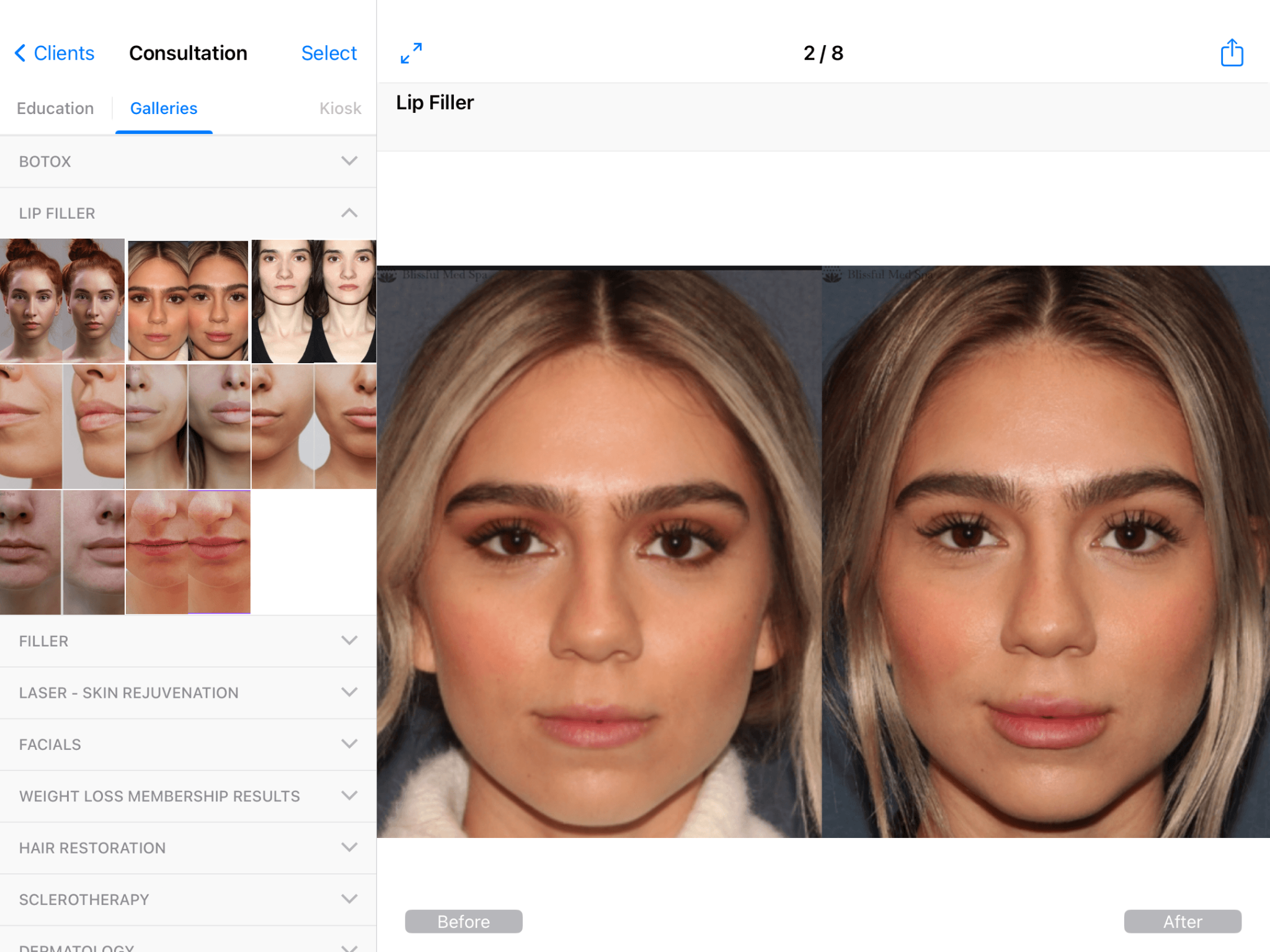
Photographic evidence of patient results is one of the most persuasive tools a practice has. Before a patient books a consultation, they are already searching for proof that the procedure works and that the surgeon can deliver it. A well-curated before-and-after gallery gives them exactly that.
The business case is just as strong as the trust case. Before-and-after galleries are among the most-visited pages on a plastic surgery site, and they pull in their own organic search traffic. Patients search procedure terms paired with "before and after" constantly, so a well-tagged gallery captures demand that your service pages alone would miss.
Galleries also help inside the consultation room. They give surgeons a visual reference for mapping out a procedure, help patients understand realistic healing timelines, and align expectations from the first conversation.
For a gallery to do that job, the images have to be consistent and clinically credible, and this is what that looks like in practice:
- Even lighting: keeps every image clear and comparable across patients and sessions.
- Clear annotations: help patients and surgeons identify and discuss specific areas of focus.
- Timeline information: shows the progression of results so patients understand the healing journey.
- Unedited images: preserve clinical credibility and set honest expectations.
- Consistent positioning and setup: guarantee a fair, accurate comparison between the before and after.
Anything less compromises the trust the gallery is meant to build. Tools like RxPhoto help practices maintain that standard with on-screen guides that keep angle, distance, and lighting consistent from one visit to the next. These practices show what a working gallery looks like:
2. Have digital forms to improve patient experience and streamline operations
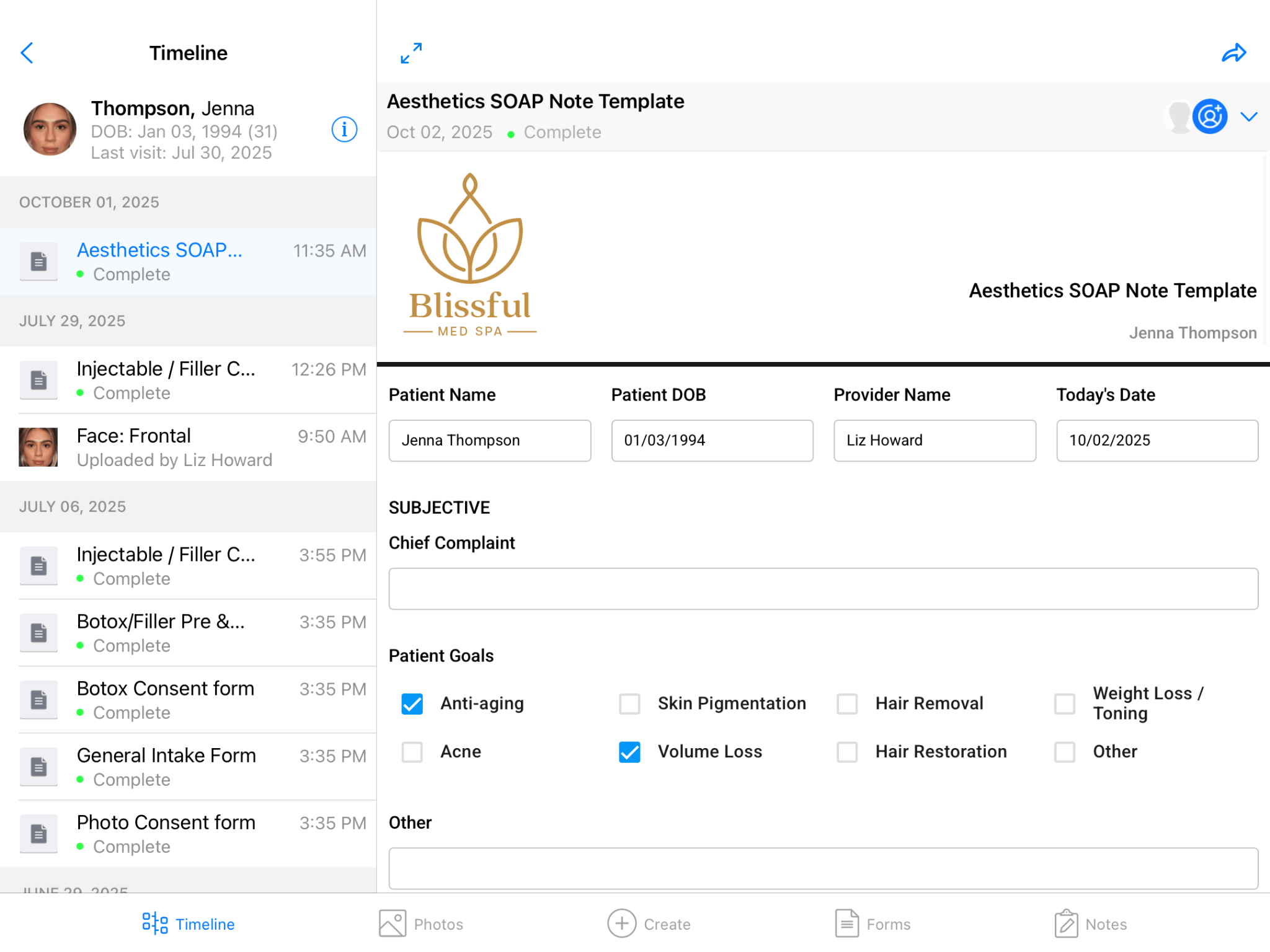
Patients don't always volunteer information they assume is irrelevant. But in aesthetic medicine, a missing detail about allergies, medications, or skin history can carry serious consequences. A well-structured digital intake form closes that gap by asking the right questions before a patient ever steps through the door.
A good intake form captures everything a practice needs about a new patient, including contact information, medical history, HIPAA disclosures, privacy statements, and informed consent. It also doubles as a patient experience tool. When forms go out on a channel patients are already comfortable with, they complete them on their own time, arrive prepared, and feel they are already in capable hands.
The operational payoff is just as significant, since digital intake forms:
- Reduce front desk workload: Staff spend less time collecting and entering information by hand.
- Speed up onboarding: Patients arrive ready to be seen instead of filling out paperwork in the waiting room.
- Cut paper-related delays: Nothing gets lost, misfiled, or stuck waiting for a scan.
- Improve appointment flow: Fewer delays mean more consultations completed per day.
- Provide legal protection: Documented consent and disclosures protect the practice in a dispute.
To do all that, an intake form should cover personal information, medical history, contraindications, informed consent, and practice policies such as cancellation terms and photo release.
The delivery method matters just as much as the form. With RxPhoto, practices send fully digital intake forms straight to patients by SMS or email, with no portal to log into or PDF to download. Removing that friction lifts completion rates and gets patients to the chair prepared. These practices handle their forms well:
3. Add real procedure videos and other visual treatment assets to educate patients and improve consultation readiness
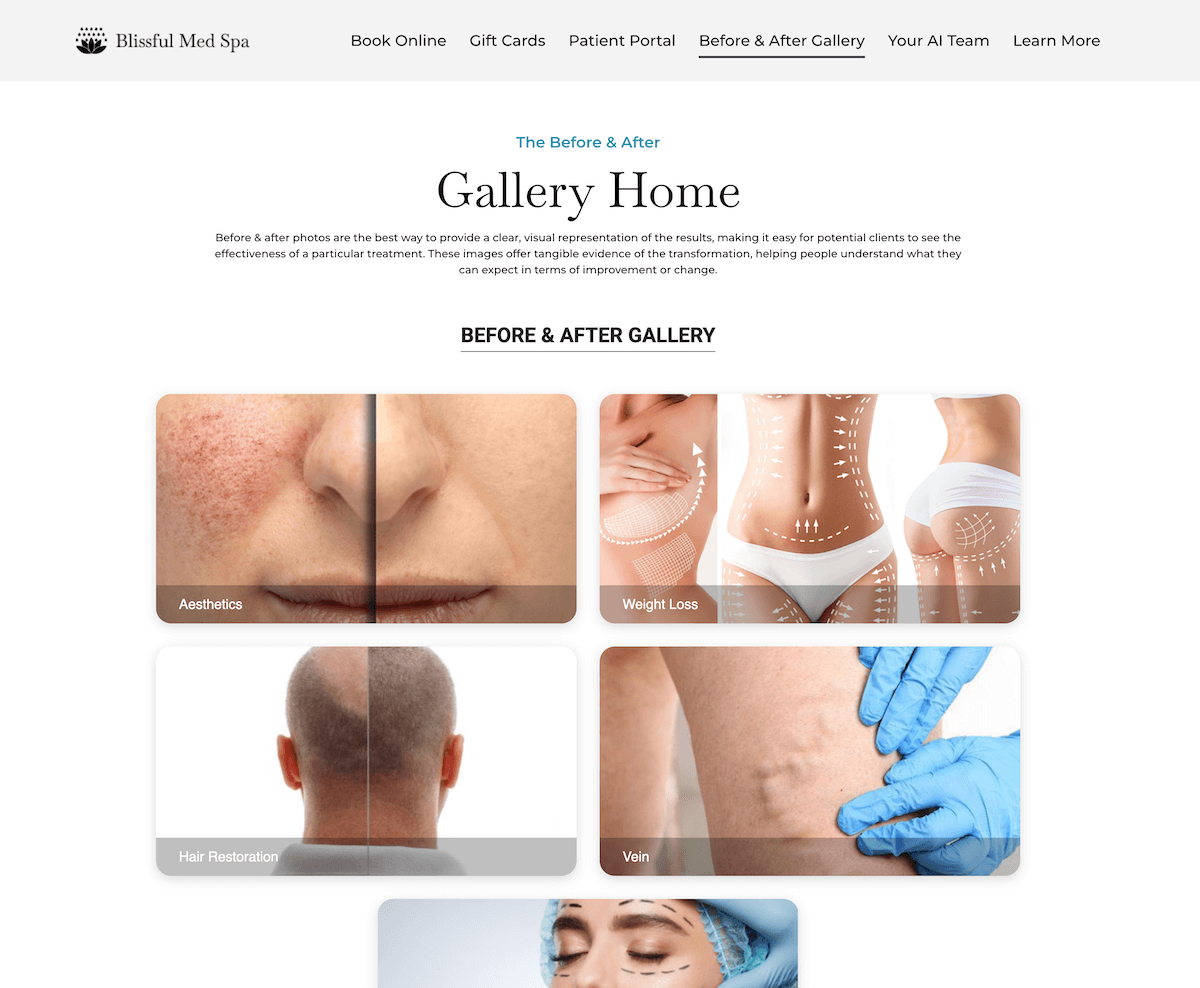
Social media has changed how patients research aesthetic procedures. Short-form video, from reels to procedure walkthroughs to patient testimonials, has become one of the most effective ways to attract and educate prospective patients online. Video conveys emotion and shows real results in motion, which static images can't, and that helps to move someone from curious to committed.
Beyond social platforms, embedding procedure videos directly on your site shows consultation readiness. A patient who watches a walkthrough before their appointment becomes familiar with the process and enters the consultation with sharper questions and more realistic expectations.
That shortens the education phase of the consultation and frees the surgeon to focus on the patient's specific goals. It also reduces repetitive questions that consume consultation time, since the video has already answered them.
Other assets do the same work from a different angle. For example, you can use annotated images and visuals to walk patients through a procedure, map out pre-op preparation, and set post-op expectations. Seeing the steps laid out helps patients self-qualify before they ever book, so the consultations you do take are with people who understand what's involved.
To get the most from video, practices should:
- Create content that resonates: Answer the questions patients are already searching for.
- Lead with storytelling: Patient journeys connect more than promotional clips.
- Maintain compliance: Follow platform guidelines and include appropriate disclaimers.
- Prioritize quality: Poor production undermines the trust the video is meant to build.
- Optimize for platform: Export as MP4 for fast loading and use vertical format for Reels and TikTok.
Good videos also support your search visibility. When visitors find content that answers their questions, they stay on the page longer and explore further. That engagement tells search engines that your site is a credible source worth ranking.
You can record video directly from the RxPhoto app under consistent angles and HIPAA-compliant storage, then handle editing and annotation in your dedicated video tools before publishing. The following practices do the same:
5. Embed Instagram and TikTok feeds to reinforce authority
Credit: Qazi cosmetic clinic
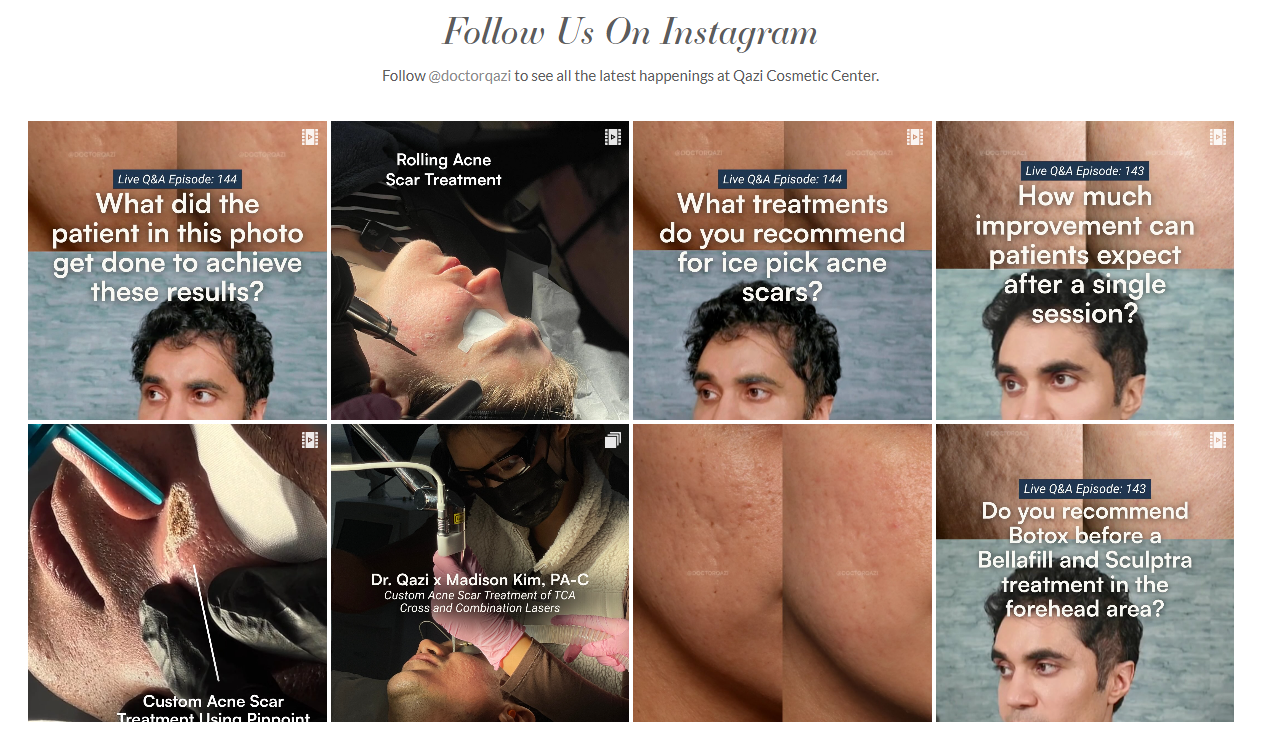
Prospective patients aren't only on your website. They are simultaneously scrolling your Instagram and TikTok for procedure videos, results, and real patient experiences. Embedding those feeds on your site bridges the two, keeping visitors engaged across both without asking them to leave.
Embedded feeds also work as live social proof. Every visible comment, like, and share tells a first-time visitor that others have already vetted and engaged with your brand, which helps more than anything you write about yourself. Those engagement signals tend to increase as visitors interact with the page’s content, and that interest pushes undecided visitors toward booking.
It's also one of the most underused ways to reinforce clinical authority. When your best-performing content sits alongside your credentials, visitors read about your expertise and watch it as well. For practices that want to put embedded feeds to work, this is what they deliver:
- Increased time on site: Visual content encourages scrolling and exploration.
- Follower growth: Visitors can discover and follow your profiles straight from your site.
- Stronger credibility: Authentic audience engagement builds trust.
- An always-current site: Your latest social content updates automatically, with no manual edits.
- Higher consultation conversions: Real-world results nudge undecided visitors toward booking.
Keeping that feed current takes no manual effort with RxPhoto's one-click Instagram integration, so the content you post goes straight to your site. Here is a practice doing this well:
How Sono Bello uses before-and-after galleries to support patient conversion
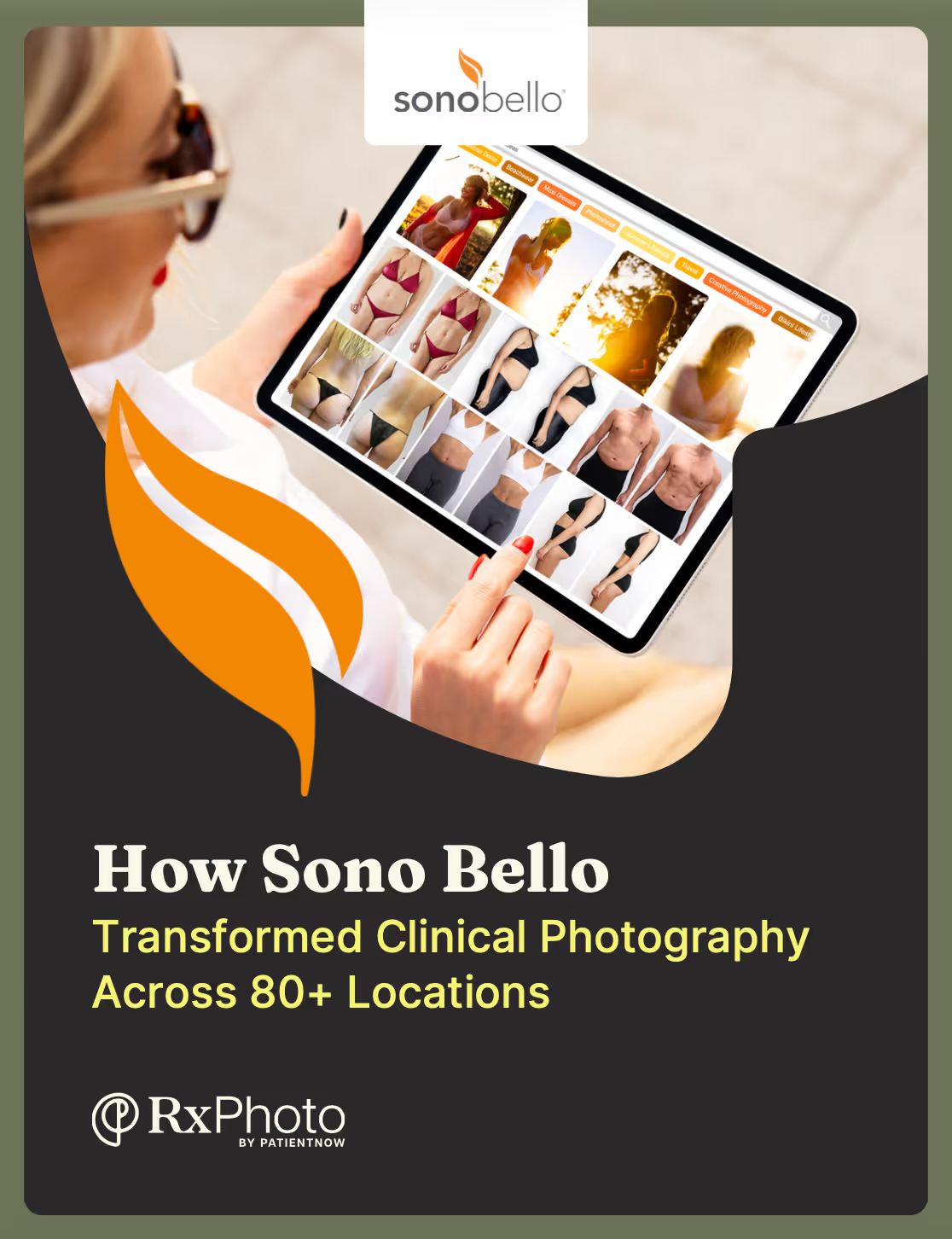
A first look at Sono Bello's before-and-after gallery shows what clinical consistency looks like in practice. The images are real and unedited, with uniform lighting, angles, backgrounds, and patient positioning, making each result unmistakably clear.
Featuring multiple patients reinforces transparency, showing prospective clients that results vary naturally from person to person and helping them form realistic expectations before committing.
Getting to this point came with a challenge. Sono Bello knew patients wouldn't book without seeing real before-and-after results, but the practice needed to improve its photography process without disrupting how staff already worked.
RxPhoto addressed both problems, saving staff seven minutes per patient visit by removing manual steps, like printing and saving images. Meanwhile, the platform’s cloud-based sharing and customizable on-screen guides kept photography consistent across all 48 locations. Every image remained dated, branded, and fully HIPAA compliant.
Your website is only as strong as the tools behind it
The gap between a plastic surgery website that looks good and one that consistently converts comes down to the elements working behind the scenes. Consistent clinical photography, seamless digital forms, compelling video, and active social proof are patient conversion tools, not just decoration.
RxPhoto is built to power all of them. As the leader in clinical photography for aesthetic practices, it standardizes the entire visual workflow, from customizable photography guides to one-click social sharing, HIPAA-compliant storage, and digital intake forms. Whether you run a single clinic or a multi-site operation like Sono Bello, RxPhoto fits into your existing workflow and scales as you grow.
Ready to put these elements to work? Book a demo with RxPhoto and see how it fits your practice.
Frequently asked questions
How can plastic surgery practices build trust with potential patients online?
By showcasing consistent, unedited patient results, maintaining active social media feeds, and making information easy to access through digital forms and procedure content. Tools like RxPhoto ensure every image meets the same clinical standard, building credibility before a patient ever books.
What visual assets are most effective at converting website visitors into consultation bookings?
Before-and-after galleries are the highest-converting asset, driving up to 83% of patient acquisition. Procedure videos, embedded social feeds, and visualized treatment plans also play significant roles.
How does RxPhoto handle patient photo sharing and consent?
RxPhoto includes built-in HIPAA-compliant consent forms that allow practices to obtain photo release approvals directly within the app. Once consent is captured, images can be shared with patients, used for marketing, or published on social media, all without leaving the platform or creating a separate consent paper trail.
How should before-and-after photos be captured and presented for maximum impact?
Under consistent lighting, angles, background, and patient positioning, and presented without editing or filters. RxPhoto's customizable on-screen guide templates help practices standardize this across all staff members and locations.
Can RxPhoto integrate with a practice's existing tools and social media platforms?
Yes. RxPhoto is designed to fit into existing practice workflows rather than replace them. It integrates directly with Instagram for one-click social media sharing and is compatible with a range of practice management tools, making it easy to adopt without overhauling how the team already operates.
Explore this post
Book a demo to see RxPhoto in action